DIY camper flooring: how I insulated and finished my Delica L300
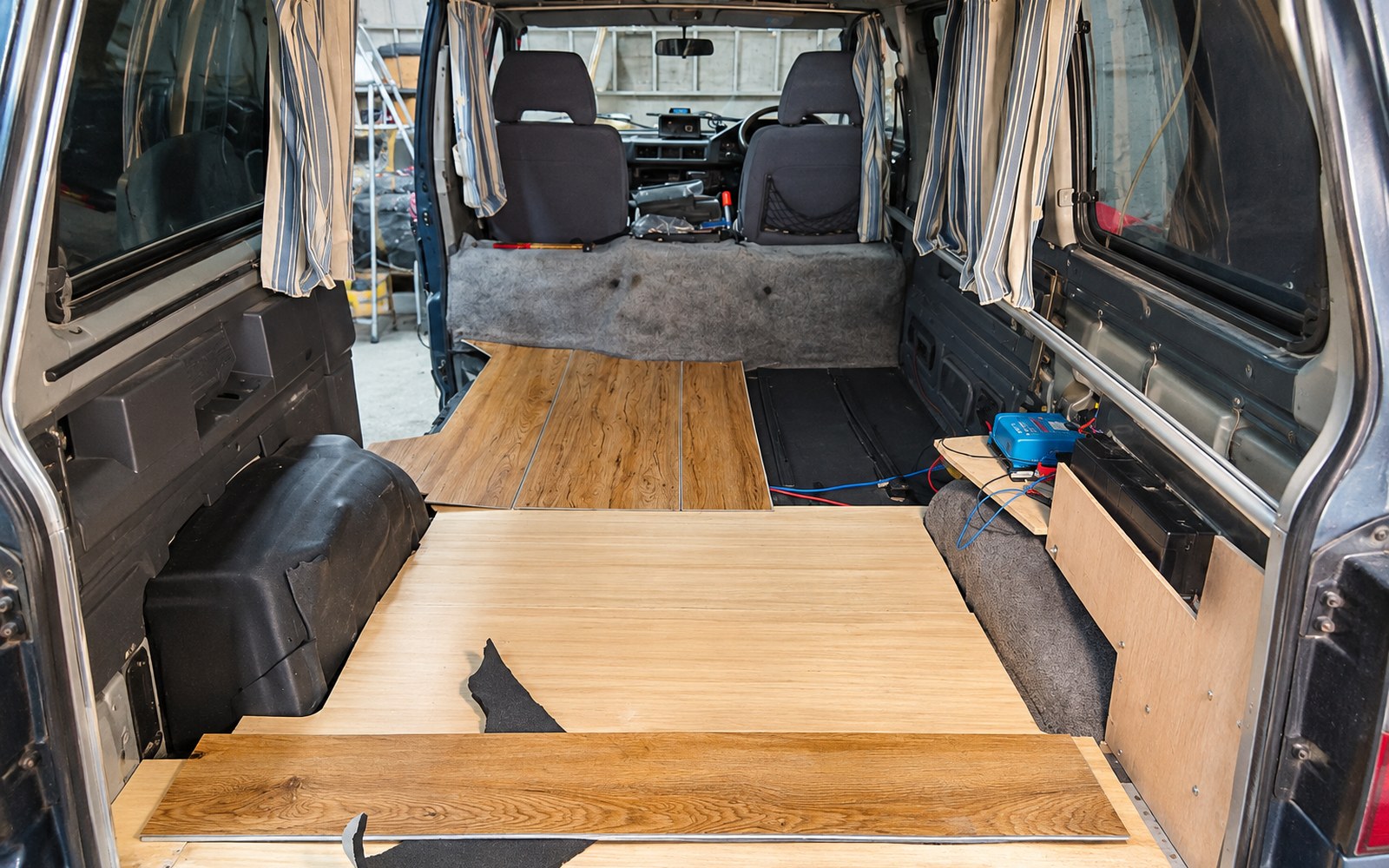
- Insulation
- 9 mm Armaflex
- Subfloor
- 10 mm poplar
- Covering
- 5 mm SPC
- Nominal total
- 24 mm
Contents
One of the first jobs I tackled during the conversion of my Mitsubishi Delica L300 4x4 was building the floor.
I wanted a surface that was durable, easy to clean and well insulated, without adding too much weight or unnecessarily sacrificing interior headroom.
After considering several materials, I chose a solution made up of 9 mm Armaflex, 10 mm poplar plywood and 5 mm wood-effect SPC flooring.
In this article I explain how I built the Delica's floor, which materials I used and which aspects I would consider when choosing a floor for any DIY camper.
1. Removing the original floor
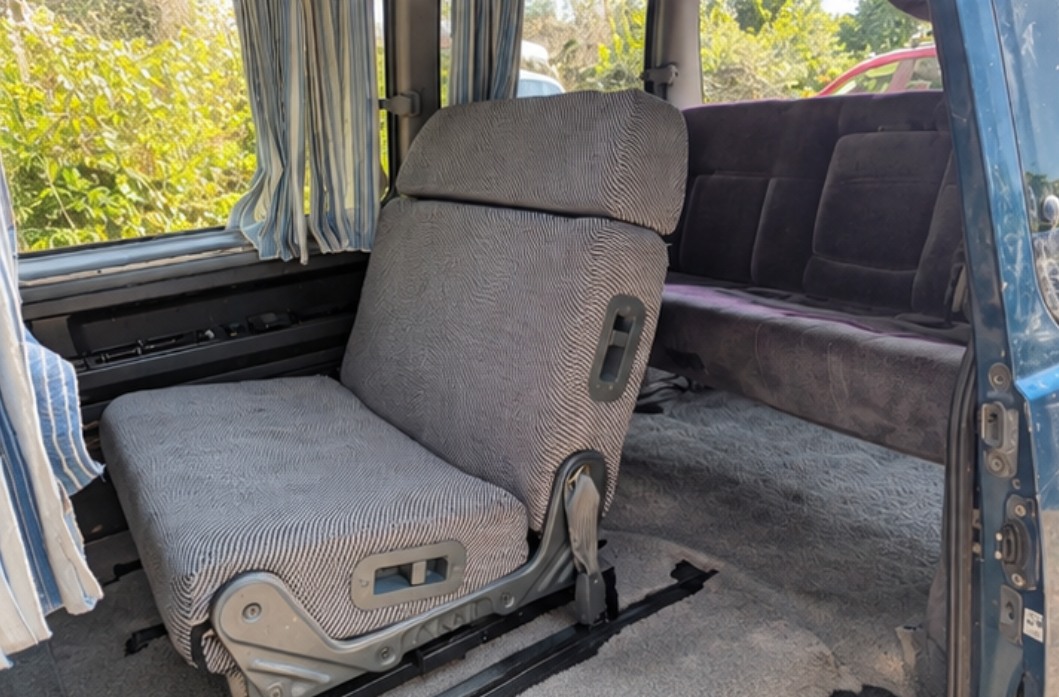
The first step was to remove the rear seats and completely strip out the carpet and old insulating materials, right down to the original sheet metal.
On a vehicle that is several decades old, this step is particularly important. Dirt, moisture and areas of corrosion that are difficult to spot from outside can hide beneath the coverings.
Once the floor was exposed, I thoroughly cleaned the surface and treated the sheet metal before starting to lay the new materials.
My advice: before covering a camper floor, check the joints, wheel arches and fixing points. If you find rust, it is important to deal with it properly before proceeding with insulation.
2. Insulating the floor with Armaflex
For insulation I used 9 mm Armaflex, a flexible closed-cell elastomeric foam material.
I preferred it to rigid panels because the Delica's floor has ribs and irregular surfaces. A flexible insulation material follows these shapes more closely and is easier to install.
The main advantages of Armaflex are:
- Thermal insulation: reduces heat transfer through the sheet metal.
- Closed-cell structure: limits water absorption by the material.
- Flexibility: adapts to irregularities in the floor.
- Limited thickness: the 9 mm provides insulation without taking up too much space.
Armaflex can also help dampen some noise, but it should not be confused with a specific anti-vibration material for bodywork.
Another important point is that it is not a structural material: it must not be used as the sole support for a floor intended to bear concentrated loads.
3. The poplar plywood subfloor
Above the insulation I placed 10 mm poplar plywood panels, used as the base for the final floor covering.
I chose poplar mainly because of its weight. Compared with denser plywood, such as birch, it helps keep the overall mass of the conversion down.
The plywood creates an even surface, distributes loads and provides a base for the SPC floor.
The most challenging part is adapting the panels to the shape of the cabin, especially around the wheel arches and side walls.
To achieve a good result it is important to:
- Take accurate measurements before cutting.
- Prevent the panels from flexing in unsupported areas.
- Protect the wood from moisture, especially along the edges.
- Plan any routes for cables and systems before closing the floor.
The plywood must have adequate support: the insulation underneath is no substitute for a structure capable of supporting loads.
4. Which flooring should you choose for a camper?
Before choosing the final covering I considered several alternatives. The most common in DIY camper conversions are PVC, SPC and wood.
| Feature | Flexible PVC | SPC | Wood |
|---|---|---|---|
| Weight | Generally light | Heavier | Variable |
| Water resistance | Good | Good | Depends on the treatment |
| Ease of cleaning | Excellent | Excellent | Good |
| Rigidity | Flexible | Rigid | Rigid |
| Installation | Glued or floating, depending on the product | Often click-lock | Depends on the system |
| Appearance | Many finishes | Many finishes | Genuine wood |
There is no single best material.
Flexible PVC is interesting for anyone who wants to keep weight down and adapt to unusual surfaces.
SPC provides a rigid surface that stands up to everyday use and is easy to clean, but it can be relatively heavy.
Wood offers a natural appearance and can be easy to work with, but requires greater attention to moisture protection.
For a camper it is also important to consider the flooring's compatibility with vibration and temperature fluctuations. Not all floors designed for homes are automatically suitable for use in a vehicle.
5. Why I chose Tolosa SPC flooring
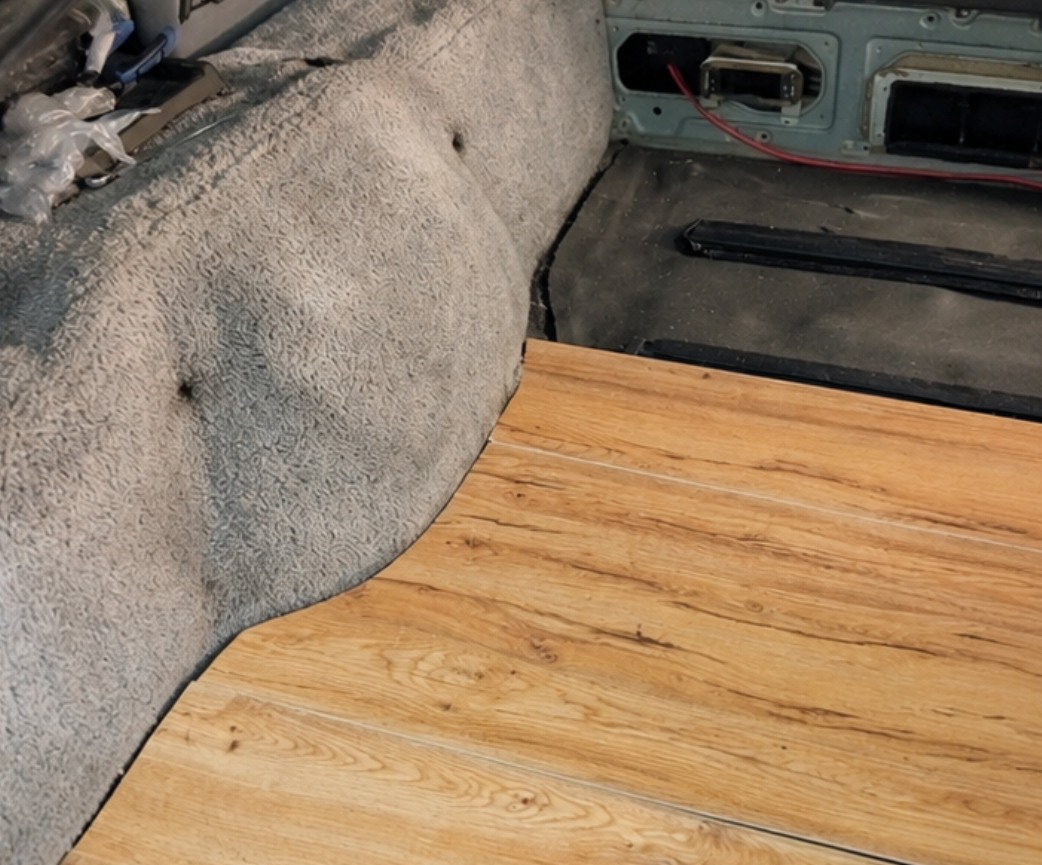
For the Delica I chose Tolosa SPC flooring from Tecnomat, with a wood-effect finish.
SPC stands for Stone Plastic Composite, a rigid composite material generally made from PVC and mineral fillers.
The product I used has a total thickness of 5 mm, made up of 4 mm of SPC and 1 mm of integrated underlay.
The features that convinced me were above all its ease of cleaning, limited thickness and appearance.
When travelling off-road, entering the van with shoes covered in mud, sand or dirt is inevitable. I therefore wanted a surface I could clean quickly, without constantly worrying about damaging it.
I also particularly liked the wood effect: it makes the interior more welcoming and goes well with the furniture I built with aluminium profiles and plywood.
One aspect to check before repeating this choice: the product's compatibility with the temperatures reached inside a camper parked in the sun, as well as the manufacturer's instructions regarding the subfloor and expansion.
6. Floor layers and thickness
The floor in my Delica consists of three main layers above the original sheet metal.
| Material | Thickness | Function |
|---|---|---|
| Armaflex | 9 mm | Thermal insulation |
| Poplar plywood | 10 mm | Rigid subfloor |
| Tolosa SPC | 5 mm | Final covering |
| Nominal total | 24 mm |
These 24 mm represent the sum of the material thicknesses. The actual space taken up can vary because of the ribs in the sheet metal, compression of the insulation and any supports.
It was important for me to keep the floor relatively thin: inside a compact van like the Delica, even a few centimetres of height can make a difference.
7. Materials used
| Material | Product |
|---|---|
| 9 mm Armaflex insulation | Amazon |
| 10 mm poplar plywood | Search Leroy Merlin |
| 5 mm Tolosa SPC flooring | Tecnomat |
The Amazon link is an affiliate link: if you buy through it I may receive a commission, at no additional cost to you. The Leroy Merlin and Tecnomat links are not affiliate links.
Conclusions
Completely rebuilding the floor was one of the first steps in the Delica's conversion and allowed me to start from a clean, checked base.
The combination of Armaflex, poplar plywood and SPC allowed me to create a relatively thin floor, with thermal insulation and a practical finish for everyday use.
If I had to give just one piece of advice to anyone converting a van, it would be this: do not focus only on the final covering. Preparing the sheet metal, protecting against corrosion and properly supporting the subfloor are just as important.
In the next articles I will cover building the furniture in aluminium and wood, the pull-out bed and the other elements of my camper conversion.
- #pavimento camper fai da te
- #isolamento pavimento camper
- #Armaflex pavimento camper
- #pavimento SPC camper
- #multistrato pioppo camper
- #come rifare pavimento van