Importing a car from Germany to Italy: my experience with a Mitsubishi Delica L300
How I bought a used car in Germany, got German export plates and drove it to Italy to complete the registration.
- Purchase
- April 2026
- Plates
- Ausfuhrkennzeichen
- Insurance
- 9 days
- Italian registration
- September 2026
Contents
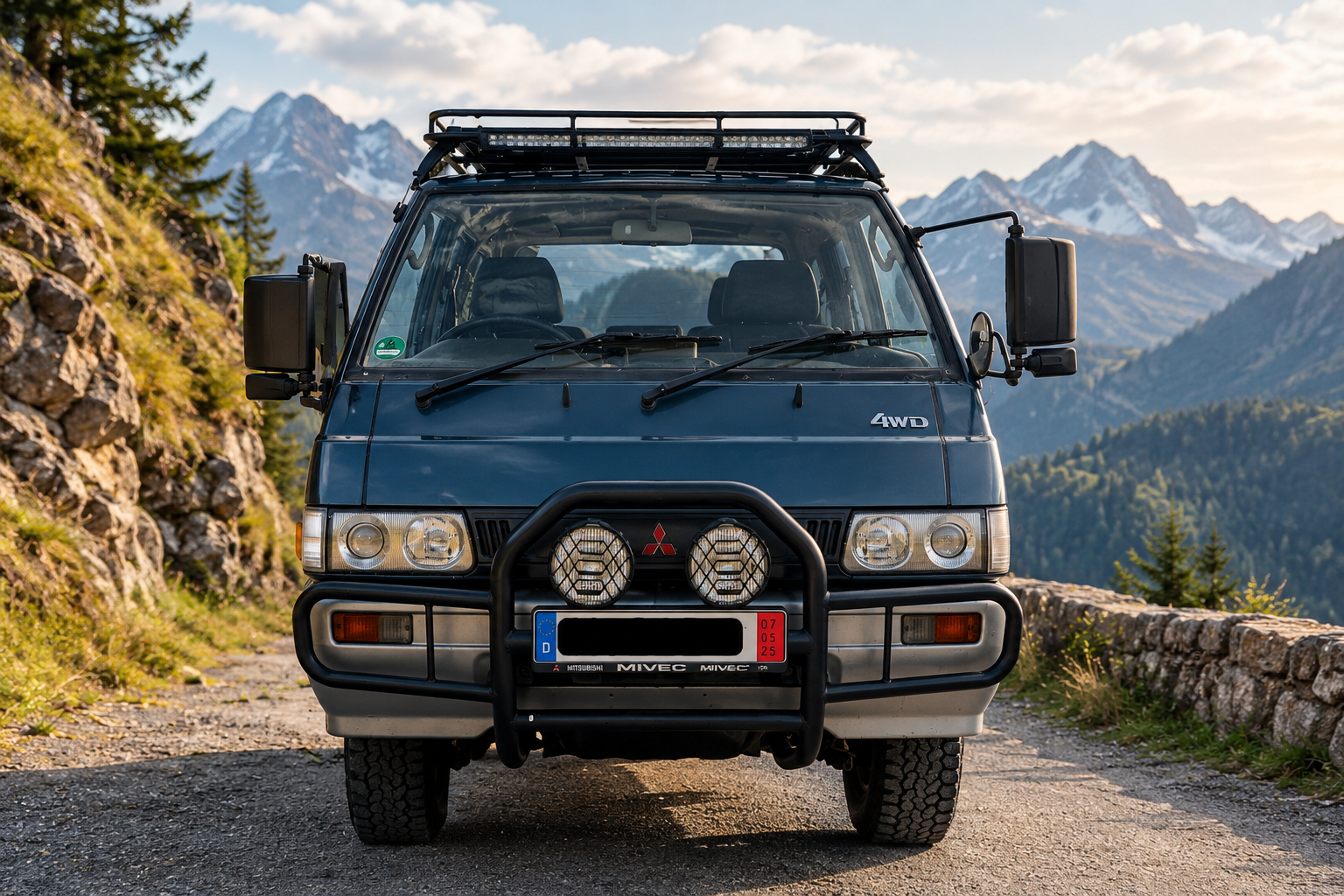
In April 2026 I bought a 1991 Mitsubishi Delica L300 4x4 JDM in Germany for €4,000.
One of the first questions I asked myself was: how do I bring it to Italy legally?
There were mainly two options: arrange transport on a car carrier, or go to Germany myself, buy the vehicle and drive it home.
I chose the second option, using German temporary export plates together with temporary insurance.
In this article I explain how it worked in my case and what you need to know before buying a used car in Germany.
Buying a used car in Germany: which documents do you need?
Before buying a vehicle in Germany it is essential to check that the paperwork is complete.
The main documents to check are:
- Zulassungsbescheinigung Teil I: the German registration certificate used on the road.
- Zulassungsbescheinigung Teil II: the document covering the registration and vehicle data, important for the later Italian procedure.
- Kaufvertrag: the sales contract, or an invoice.
- HU/TÜV: the German roadworthiness inspection records.
In my case the Delica was already registered in Germany, even though it was a JDM vehicle originally built for the Japanese market.
This was an important point for the later registration procedure in Italy.
German export plates: how to bring a car from Germany to Italy
To drive a car bought in Germany to Italy, one solution is to apply for German export plates, called Ausfuhrkennzeichen or Zollkennzeichen.
They are recognisable by the red side strip showing the expiry date.
These plates let you drive the vehicle temporarily, as long as they are valid and backed by the required insurance cover.
In my case I had temporary cover for 9 days, enough for the transfer.
You get export plates at the German registration office, the Zulassungsstelle, and you need the vehicle documents, insurance and the other applicable requirements.
Don't confuse them with the German temporary plates with a yellow strip (Kurzzeitkennzeichen), which serve a different purpose and should not be taken for granted as a solution for an international transfer.
Driving my Delica from Germany to Italy
Once I had the necessary documents, I could drive the Mitsubishi Delica L300 back to Italy by road.
It was also a chance to start getting to know the van: an old Japanese 4x4 with right-hand drive, an automatic gearbox and a turbodiesel engine more than thirty years old.
Driving it myself saved me from organising a car carrier, although of course you have to factor in fuel, tolls, travel to reach the seller and the cost of the temporary plates.
For anyone buying a used car in Germany this can be an interesting option, especially if the vehicle runs well, has a valid inspection and is in good mechanical condition.
Registering a car imported from Germany in Italy
Once I got to Italy, the job wasn't over.
To use the Delica permanently with Italian plates I had to complete the nationalisation and registration procedure.
In my case, since it is a 1991 JDM Mitsubishi Delica, I had to gather and verify several technical data, including engine, dimensions, weights, tyres and braking system specifications.
I bought the vehicle in April 2026 and got the Italian registration document in September of the same year.
About five months between purchase and final registration.
That doesn't mean importing any car from Germany takes this long. In my case the Japanese origin and the vehicle's technical documentation made the procedure more unusual.
Is it worth importing a car from Germany?
In my case, yes.
I found a Mitsubishi Delica L300 JDM 4x4 that I would hardly have been able to buy in Italy, for €4,000, and I managed to bring it home by driving it myself.
Importing a car from Germany can be a good opportunity to find rare vehicles, special versions or models that are uncommon on the Italian market.
My advice is to check before buying both the documents needed for the temporary plates and whether the vehicle can be registered in Italy.
This matters even more when buying JDM cars, classic vehicles or models not originally type-approved for the European market.
For me, that trip from Germany was only the first step of a much bigger project: turning an old Mitsubishi Delica L300 into a 4x4 camper for vanlife and overlanding.
Useful references
- ADAC — Ausfuhrkennzeichen and Zollkennzeichen (in German): documents, insurance, inspection and the difference between red- and yellow-strip plates.
- ACI — Vehicle nationalisation (in Italian): the official procedure for registering a foreign vehicle in Italy.
- The full story of my Delica L300: the first chapter of the project.
- #Importare auto dalla Germania
- #Targhe provvisorie tedesche
- #Ausfuhrkennzeichen
- #Immatricolazione auto tedesca
- #Importazione JDM Italia
- #Mitsubishi Delica
- #L300